Source Removable Telescopic Bleacher for Stadiums Exhibitions Parties
Find 30 options for the removable telescopic bleacher designed for stadiums, international exhibitions, and outdoor parties. Buyers can compare steel or aluminum structures, custom sizes, and certifications like ISO9001 and CE across multiple Chinese suppliers.
Key considerations
Products List




Comprehensive Sourcing Guide
Strategic Sourcing Guide for Removable Telescopic Bleachers
Understanding the Technical Architecture and Material Composition
When sourcing removable telescopic bleachers, the primary objective is to identify a system that balances structural integrity with the operational flexibility required for multi-purpose venues. The core of these units typically relies on high-grade steel frameworks. Based on available market data, the predominant structural material observed is Steel Q235B, often finished with a black power coating to ensure resistance against corrosion and environmental wear. This material selection is critical for supporting dynamic loads, particularly in stadium and exhibition environments where the seating capacity can range from 200 to 300 people or more, depending on the specific ground measurements provided by the venue.
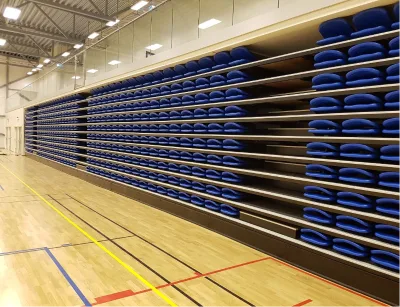
The telescopic mechanism itself is a defining feature of this equipment category. Unlike fixed seating, these units are designed to be retracted to create open floor space or extended to provide tiered viewing. The structural design often incorporates a "Manual Orelectrical" operation mode, allowing venues to choose between manual hydraulic systems or electric motorization based on their budget and frequency of use. The wheels, which facilitate the movement of the entire unit, are typically constructed from steel to withstand the heavy loads of the extended structure.
Material variations exist across different product lines. While the primary frame is almost exclusively steel, the seating components themselves may vary. Some configurations utilize metal frames with plastic chairs, while others may feature all-metal construction. The surface treatment is a vital aspect of the manufacturing process, with powder coating being the standard finish for the steel components. This treatment not only enhances the aesthetic appeal but also provides a durable barrier against rust, which is essential for units that may be stored outdoors or in humid environments. The standard thickness of the plywood used in packing, observed at 18mm with PVC protection, indicates a robust approach to shipping, ensuring the delicate telescopic mechanisms arrive without damage.
Compliance Verification and Certification Standards
In the B2B procurement of stadium and exhibition seating, compliance with international safety and quality standards is non-negotiable. Buyers must verify that the supplier can provide documentation confirming adherence to specific certifications. The market data indicates a range of recognized certifications, including ISO9001, ISO14001, and CE marks. These certifications suggest that the manufacturer has established quality management systems and environmental protocols.
Specific to the structural integrity of the bleachers, the EN1090 standard is frequently cited. This standard governs the execution of steel and aluminum structures, ensuring that the welding and fabrication processes meet rigorous safety requirements. Buyers should look for evidence of "En1090 Welding" certification, which validates that the structural joints have been executed by certified personnel. Additionally, third-party testing by organizations such as SGS and TUV (Germany) provides an independent verification of the product's load-bearing capacity and safety features. The presence of Fiba certification further underscores the product's suitability for international sporting events.
It is important to note that certification status is not universal across all listed models. While some products explicitly list Fiba, CE, and EN1090 certifications, others may only list ISO standards. Procurement teams must treat these certifications as specific attributes of the individual product model rather than a blanket guarantee for the entire supplier catalog. When evaluating a potential supplier, request the specific test reports for the model you intend to purchase. Verify that the test results cover the maximum load capacity and the stability of the telescopic mechanism under full extension.
Cost Drivers and Pricing Dynamics
The pricing of removable telescopic bleachers is influenced by a complex interplay of factors, including material costs, customization requirements, and the complexity of the telescopic mechanism. The observed price range in the market spans from 7 to 700 USD, a wide disparity that reflects the difference between individual seating components and complete, multi-row telescopic units.
The Minimum Order Quantity (MOQ) is a significant cost driver. Data indicates an MOQ range of 1 to 300 units, with a specific observation of 50 seats for certain custom configurations. Purchasing smaller quantities may result in a higher unit cost due to the fixed costs of setup and logistics. Conversely, bulk orders can leverage economies of scale. The customization of size and logo is a key variable; while the design service is often offered for free, the actual production of custom dimensions and branding adds to the manufacturing time and cost.
Lead times also impact the total cost of ownership. The standard lead time observed is within 15 days, but this can vary based on the complexity of the order and the current production schedule. Buyers should account for potential delays if they require specific customizations, such as unique seat colors or non-standard dimensions. The packing method, whether it is a carton package, bubble film, or 18mm thickness plywood with PVC, also affects shipping costs. Heavier or bulkier packaging requires more freight space, which can significantly increase the landed cost of the product.
Typical Applications and Operational Versatility
Removable telescopic bleachers are engineered for versatility, making them suitable for a diverse array of applications. The primary usage scenarios include playgrounds, outdoor parties, international exhibitions, and roadshow promotions. In these settings, the ability to quickly convert a flat floor into tiered seating is invaluable. The units are designed to be disassembled and reassembled, allowing for easy storage when not in use.
The "Kind" of product observed includes beach chairs and stadium chairs, indicating that these units can be adapted for various seating styles. For instance, in a stadium setting, the bleachers provide a permanent or semi-permanent solution for spectators, while in an exhibition context, they serve as temporary viewing stands for product demonstrations or performances. The capacity of these units can be tailored to hold 200 to 300 people, making them ideal for medium-sized events.
The "Type" of operation, whether manual or electrical, dictates the operational workflow. Manual systems require physical effort to extend and retract, which may be suitable for venues with low frequency of use. Electrical systems, on the other hand, offer greater convenience and speed, making them preferable for high-traffic venues like international exhibitions where rapid setup and teardown are essential. The "Condition" of the product is typically listed as "New," ensuring that buyers receive fully functional units with no prior wear and tear.
Supplier Evaluation and Selection Criteria
Selecting the right supplier for telescopic bleachers requires a thorough evaluation of their capabilities and track record. The "prod_origin" data shows that manufacturers are located in key industrial hubs such as Guangzhou, Shenzhen, and Jiangsu in China. While these locations offer access to a robust supply chain, buyers should verify the specific factory capabilities of the supplier.
Key evaluation criteria include the supplier's ability to support customization. The "Custom" attribute confirms that suppliers generally support custom sizes and logos, but the extent of this customization should be clarified. Does the supplier offer free design services, and are there limitations on the complexity of the custom designs? The "Selling Units" attribute, listed as "Single Item," suggests that suppliers are flexible in their sales models, allowing buyers to purchase individual units or complete sets.
The "Warranty" period is another critical factor. A warranty of 8 to 10 years indicates a high level of confidence in the product's durability. Buyers should scrutinize the terms of this warranty to understand what is covered, such as structural integrity, hydraulic systems, or surface coatings. Additionally, the "Disassembly" attribute, which lists both "Disassembly" and "Assembly" as well as "Undisassembly" for certain models, highlights the need to clarify the specific configuration. Some units are designed for permanent installation with minimal disassembly, while others are fully modular.
Quality Control and Long-Term Procurement Considerations
Quality control is paramount when dealing with heavy-duty equipment like telescopic bleachers. The "prod_standard" and "prod_packing" details provide insight into the manufacturer's attention to detail. The use of Q235B carbon steel and black power coating is a standard that ensures longevity, but buyers must verify that the coating thickness and application process meet industry standards. The "Center Distance" of 500mm is a specific specification that affects the spacing of the seats, which must be verified to ensure compliance with local safety regulations.
Long-term procurement considerations involve the lifecycle management of the equipment. The "Weight" of approximately 38kg per seat is a significant factor for logistics and handling. Buyers should assess whether their venue has the necessary infrastructure to move and store these units. The "Bleacher Structure" made of Q235B Carbon Steel is robust, but regular maintenance is required to prevent rust and ensure smooth operation of the telescopic mechanism.
The "Surface Treatment" process, specifically powder coating, is a key indicator of quality. Buyers should request samples or detailed specifications of the coating process to ensure it meets the required durability standards. Furthermore, the "Certified" status, including Fiba, CE, and EN1090, should be reviewed annually to ensure that the supplier maintains their compliance status.
Comparative Analysis of Product Specifications
To assist buyers in making informed decisions, the following table compares key specifications observed across different product models. This comparison highlights the variations in materials, certifications, and configurations that buyers should consider.
| Specification | Model BL-STE | Model KK-CF | Model AE-YH/CF | Model VG-CV | Model ZL-105 |
|---|---|---|---|---|---|
| Structure Material | Steel Q235B | Metal | Metal | Metal | Customized |
| Surface Treatment | Black Power Coating | Powder Coating | Powder Coating | Powder Coating | Customized |
| Certifications | ISO9001, TUV, CE | Fiba, CE, EN1090 | Fiba, CE, EN1090 | En1090, CE, SGS | Not Specified |
| Origin | Guangzhou, China | Shenzhen, China | Shenzhen, China | Shenzhen, China | Jiangsu |
| Packing | 18mm Plywood w/ PVC | Carton Package | Carton Package | Carton Package | Bubble Film |
| Disassembly | Disassembly | Disassembly | Disassembly | Undisassembly | Not Specified |
| Usage | Playground, Exhibition | Playground, Exhibition | Playground, Exhibition | Stadium, Exhibition | Playground |
| Type | Manual/Orelectrical | Stadium | Stadium | Stadium | Stadium |
This table illustrates that while the core material (Steel Q235B) is consistent in many models, the origin and specific certifications vary. Buyers must align these specifications with their specific venue requirements and regulatory obligations. For instance, a venue requiring Fiba certification for international events must select a model like KK-CF or AE-YH/CF, whereas a venue prioritizing custom dimensions might look to models with "Customized" standard specifications.
Final Procurement Recommendations
The procurement of removable telescopic bleachers is a strategic decision that requires careful attention to technical specifications, compliance, and long-term operational needs. Buyers should prioritize suppliers who can demonstrate robust quality control, offer comprehensive certifications, and provide flexible customization options. The wide range of observed prices and MOQs suggests that there are options available for various budget levels, but the lowest price should not be the sole determinant of selection.
Instead, focus on the total cost of ownership, including maintenance, warranty coverage, and the durability of the materials. Verify that the telescopic mechanism is reliable and that the safety features meet all relevant standards. By conducting a thorough evaluation of the supplier's capabilities and the specific product attributes, buyers can secure a solution that enhances their venue's versatility and ensures the safety of their patrons. The availability of free design services and the support for custom sizes and logos further empower buyers to create a seating solution that perfectly matches their unique requirements.
FAQs
What certifications do removable telescopic bleachers typically have?
Most models carry ISO9001, CE, and EN1090 certifications. Some units also include Fiba and TUV testing results to ensure structural safety for international events and stadium use.
How long is the lead time for custom orders?
The standard lead time is within 15 days for most configurations. Custom sizes or logos may require additional time depending on the specific production schedule and factory capacity.
Can I customize the size and logo of the bleachers?
Yes, suppliers support custom sizes and logo printing for these units. Free design services are often available, allowing buyers to tailor the seating arrangement to their venue requirements.
What is the typical minimum order quantity for these seats?
The minimum order quantity ranges from 1 to 300 units depending on the model. Specific custom configurations often require a minimum of 50 seats to proceed with production.
Which materials are used for the bleacher structure?
The primary structure is made of Steel Q235B with black power coating. Some models use aluminum frames or metal construction with plastic chairs for specific lightweight applications.
What is the warranty period for the telescopic mechanism?
The warranty period is typically between 8 to 10 years for the structural components. This coverage ensures durability against wear and tear in high-traffic stadium or exhibition environments.